PDigger

Search for Excel-related work

You recorded yourself exporting a Xero report toward Excel, or any other sheet work. Find it again from words that were on the screen. Search uses local text and TinyCLIP. It does not call VLM assistance.

Step 1

Open Timeline

The journal lists observed work, newest first. When there are more than 100 records, the page says Showing the first 100 records. Use Show more below.
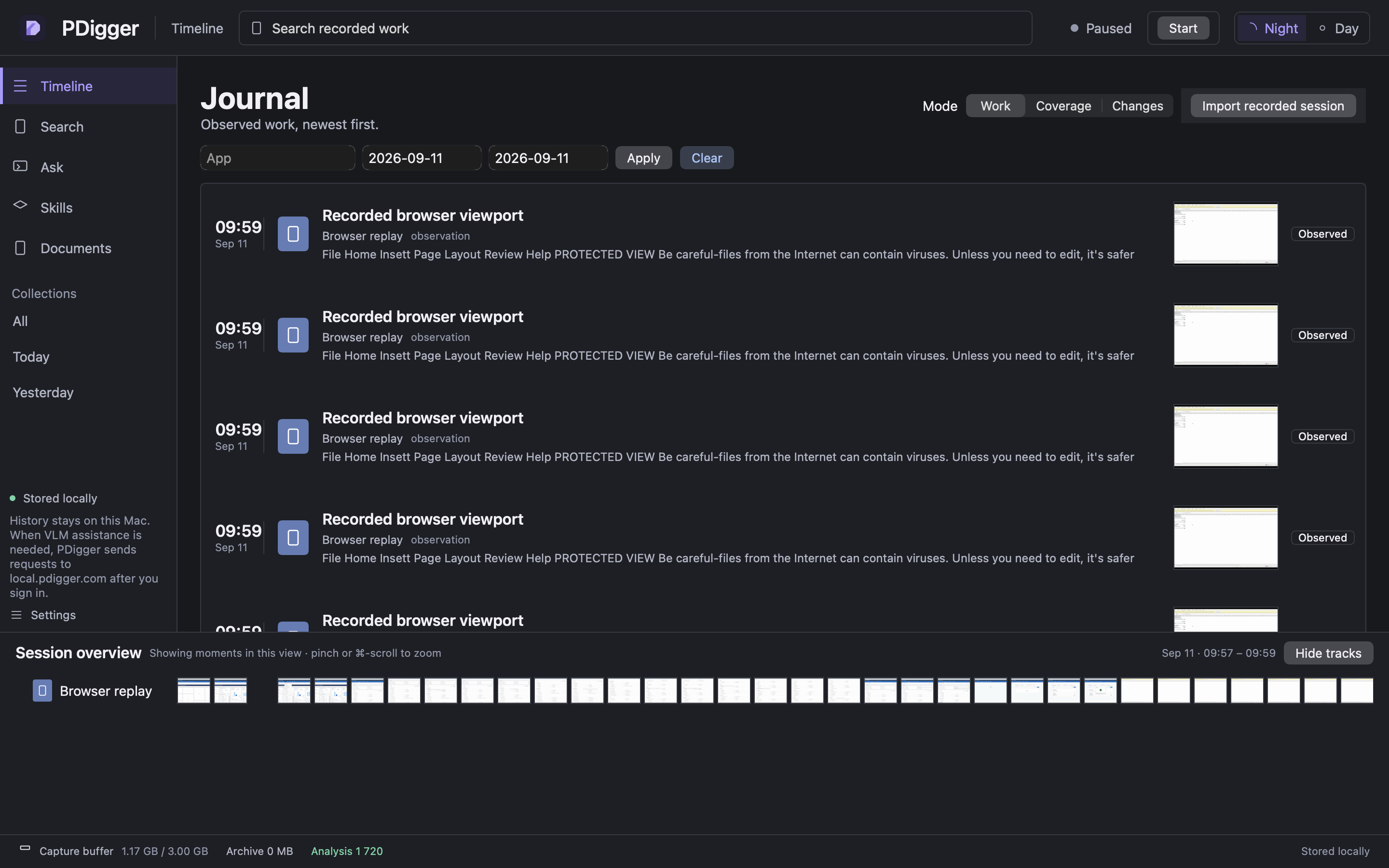
Timeline journal listing recorded Xero report work, newest first
Timeline is newest first. This example is the Xero→Excel day: the journal is the exported sheet in Excel Protected View, and the filmstrip is that same session — not a later talking-head outro. Imported windows stay Recorded browser viewport.

Step 2

Choose Search in the sidebar. The search box at the top of the window is the same field: type there or on the Search page.
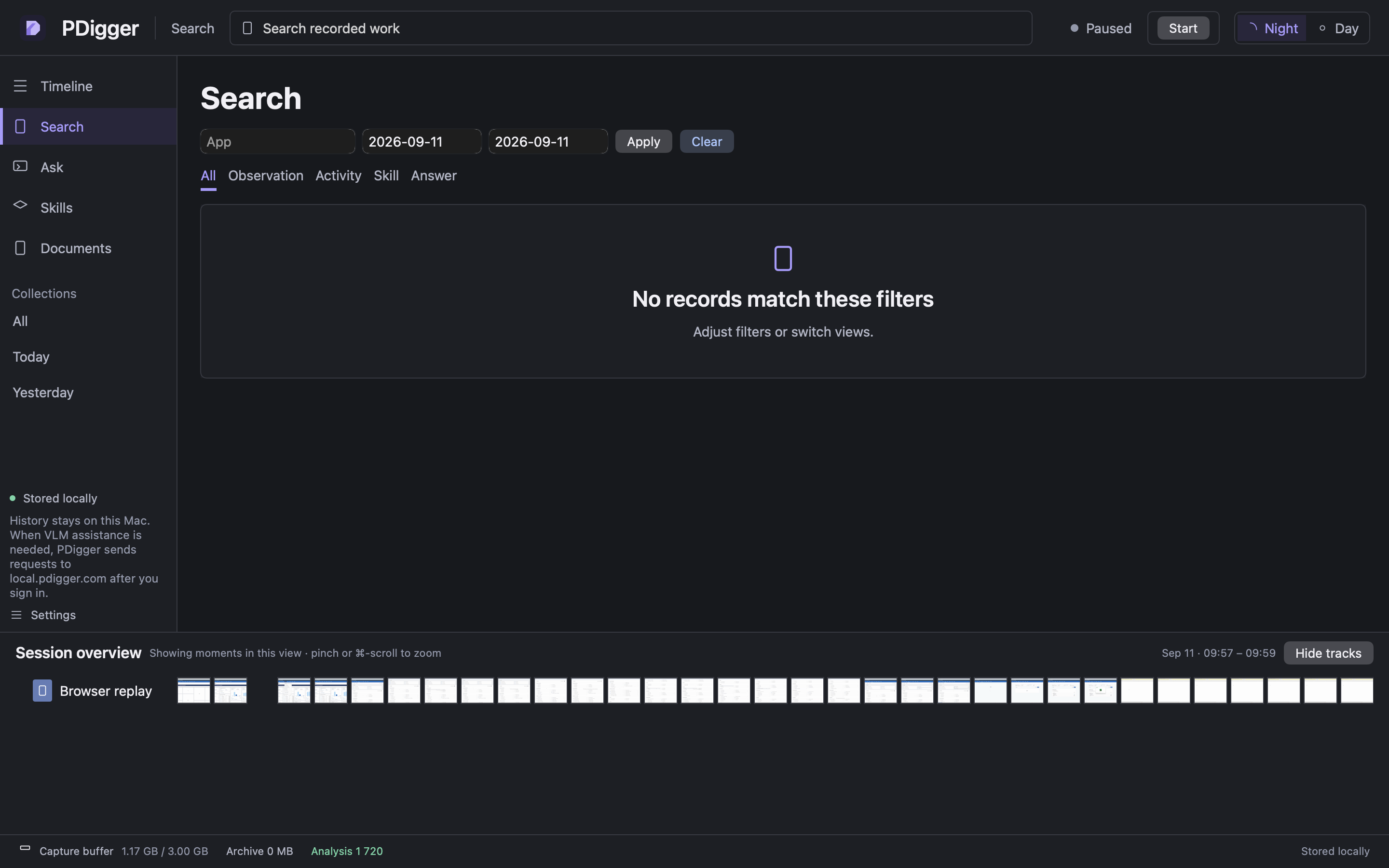
Empty Search page with filters for app, from and to dates
Search is a local lookup over recorded work. Filters for app, from and to sit above the results. Set From / To to the day of the export if the filmstrip would otherwise show a later session.

Step 3

Type a phrase that was on screen

Use words you can see in the recording, for example Financial performance. A caption-only word that never appeared on screen will not help. Press Return or wait for hits after you run the search.
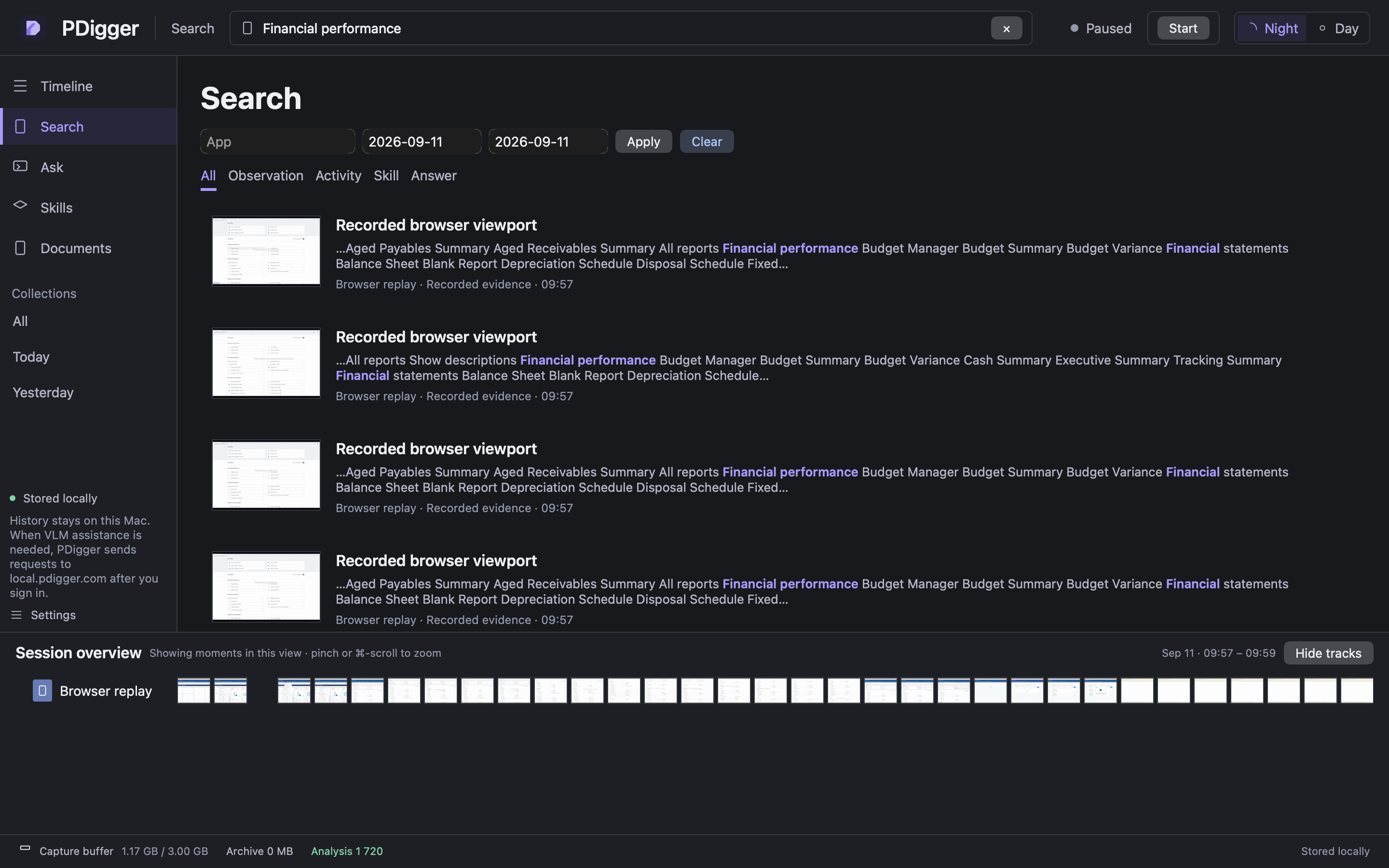
Search for Financial performance showing hits of the Xero reports page
Type Financial performance — a phrase that was visible on the Xero report — then run the search. Hits should be the report UI, not a person on camera.

Step 4

Read the hits

Each hit shows a title, a short excerpt with matching words highlighted, and the app, record type and time. Records with an image also have a thumbnail. The application name on imported browser sessions is Browser replay.
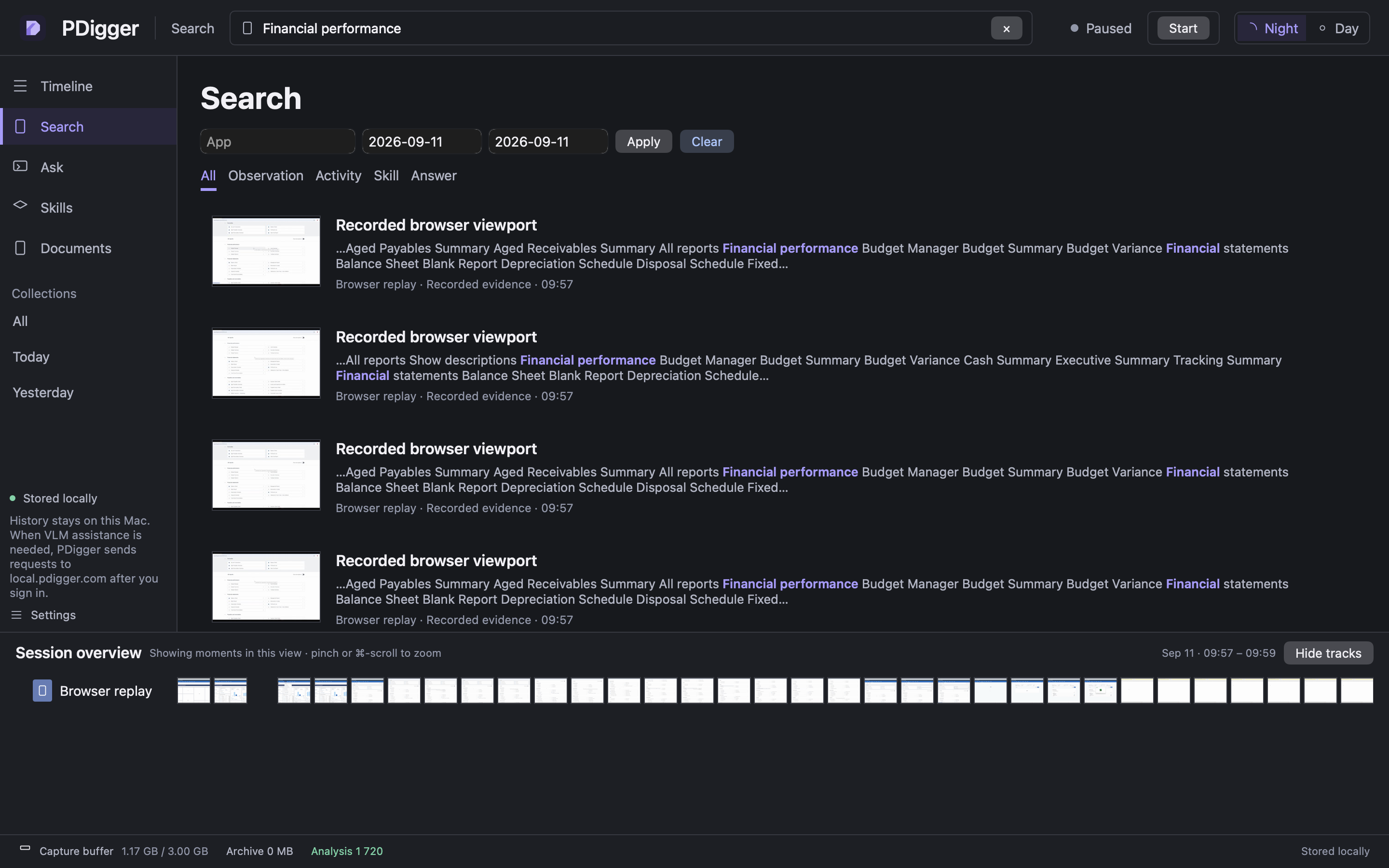
Search results with Recorded browser viewport titles, highlighted Financial performance excerpts, thumbnails, app names and times
Hits for Financial performance. Thumbnails and OCR come from what was on screen. These shots are Browser replay, not a Microsoft Excel app filter. Session overview follows the same day as the hits.

Step 5

Open one hit

Click a hit. The inspector appears only after a selection. It shows the image and the OCR for that record. Close it to return the list to full width.
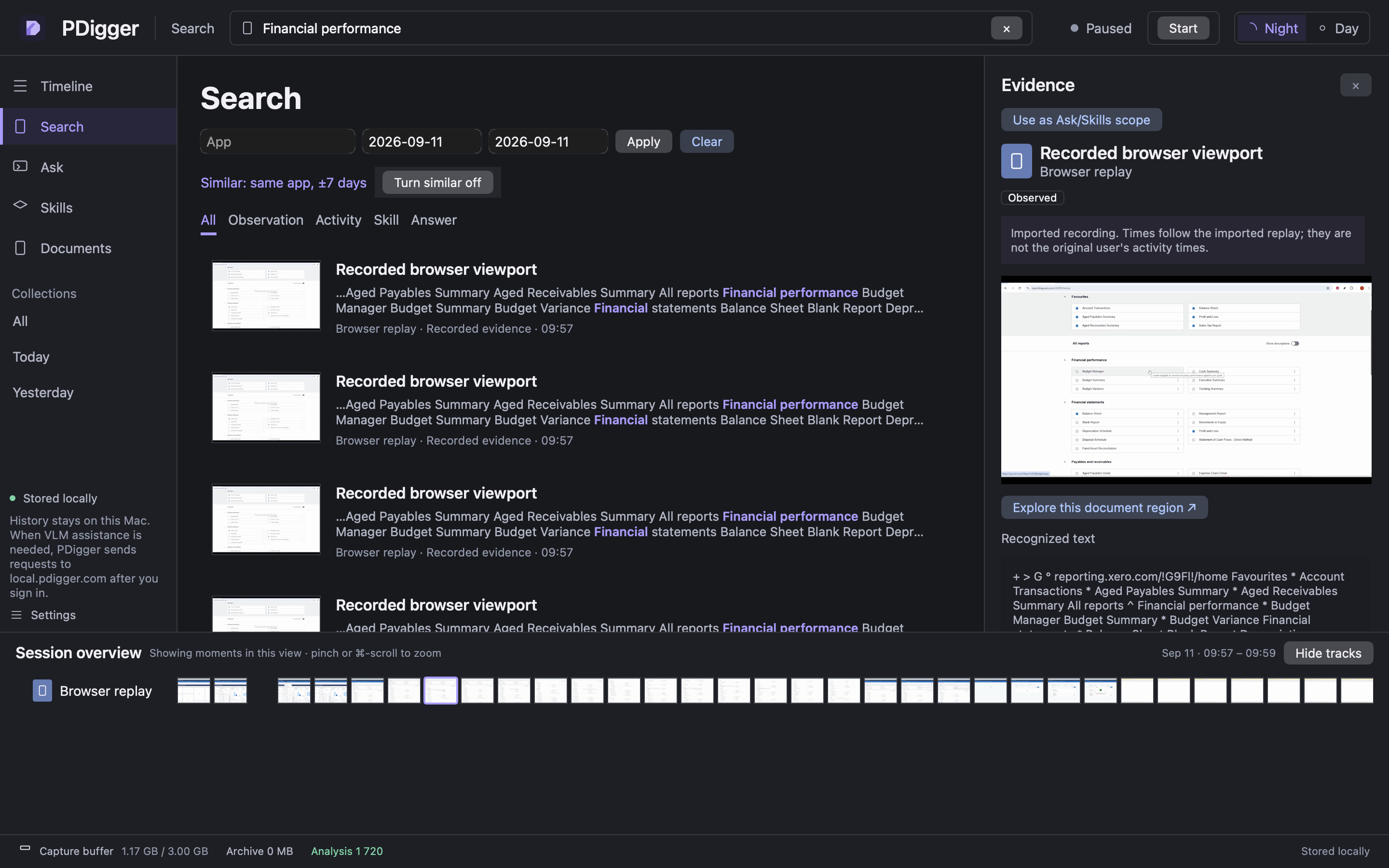
Search hit selected with the Evidence inspector showing the recorded frame
The Evidence inspector opens after you click a hit. Compare the matching text with the image.

Step 6

Narrow with dates or an app

Use From and To when you remember the day. Use the Application filter only if your recording named Excel as the app. Tutorial and browser-replay shots stay Browser replay — do not expect a Microsoft Excel chip on those frames.

Step 7

Show more

If another page of results exists, Search shows Showing the first 100 matches. Narrow the filters or use Show more below. Scroll to the bottom of the results and choose Show more to load the next page. Pages stay newest-first and do not repeat rows.
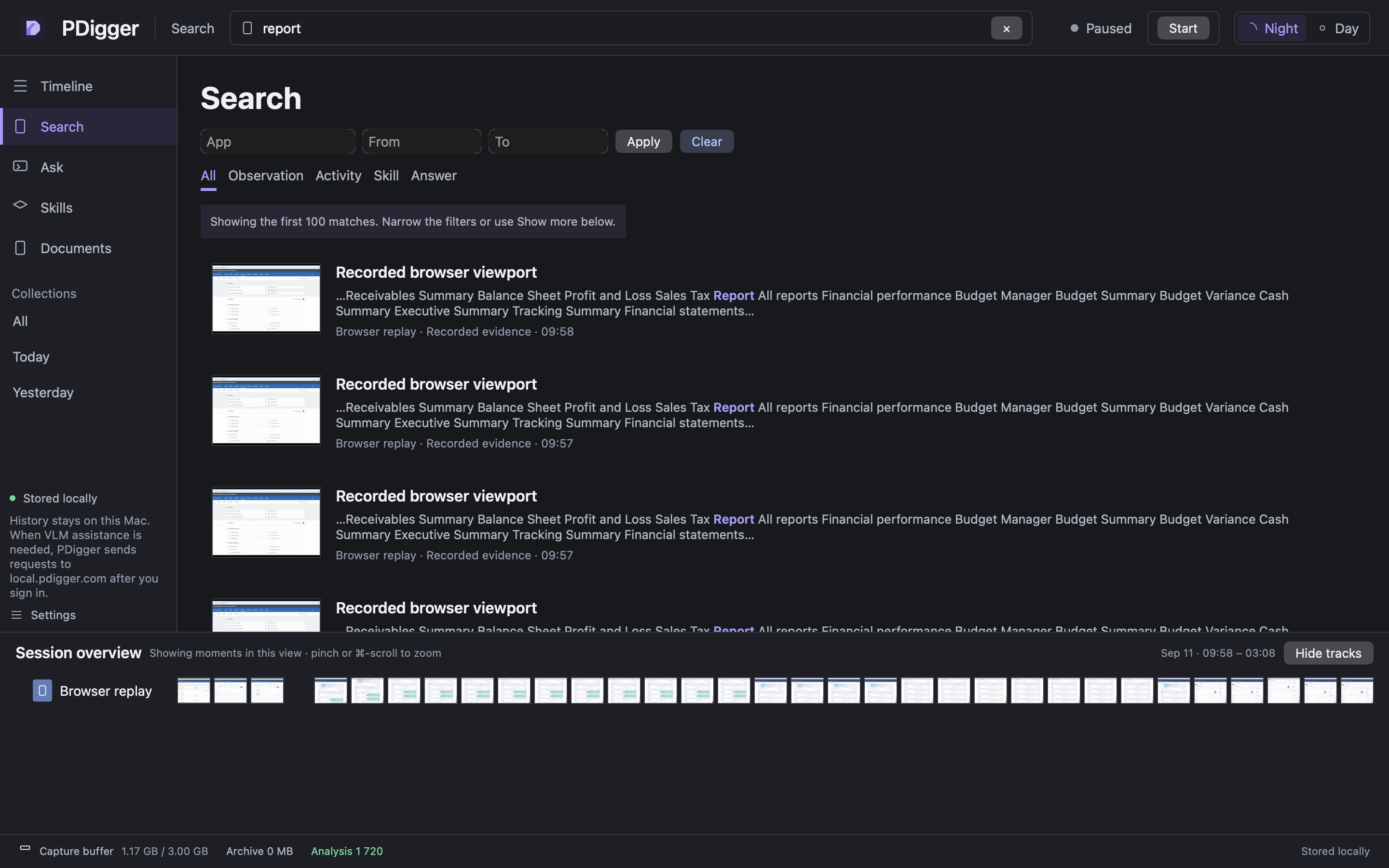
Search for report showing the first 100 matches notice, highlighted excerpts and a timeline filmstrip of recorded application screens
The broader query report has more than 100 matches in this recording, so the notice appears above the results. Show more is at the bottom of the list. A query with fewer results may fit on one page; the control appears only when another page exists.

Step 8

Open the same surface in Documents

Documents lists retained maps. Select a surface to zoom: Scroll to zoom · drag to move. Ambiguous frames are never stitched into one surface. Use Fit document to return to the fitted view. Highlight OCR finds text that was recorded on that map.
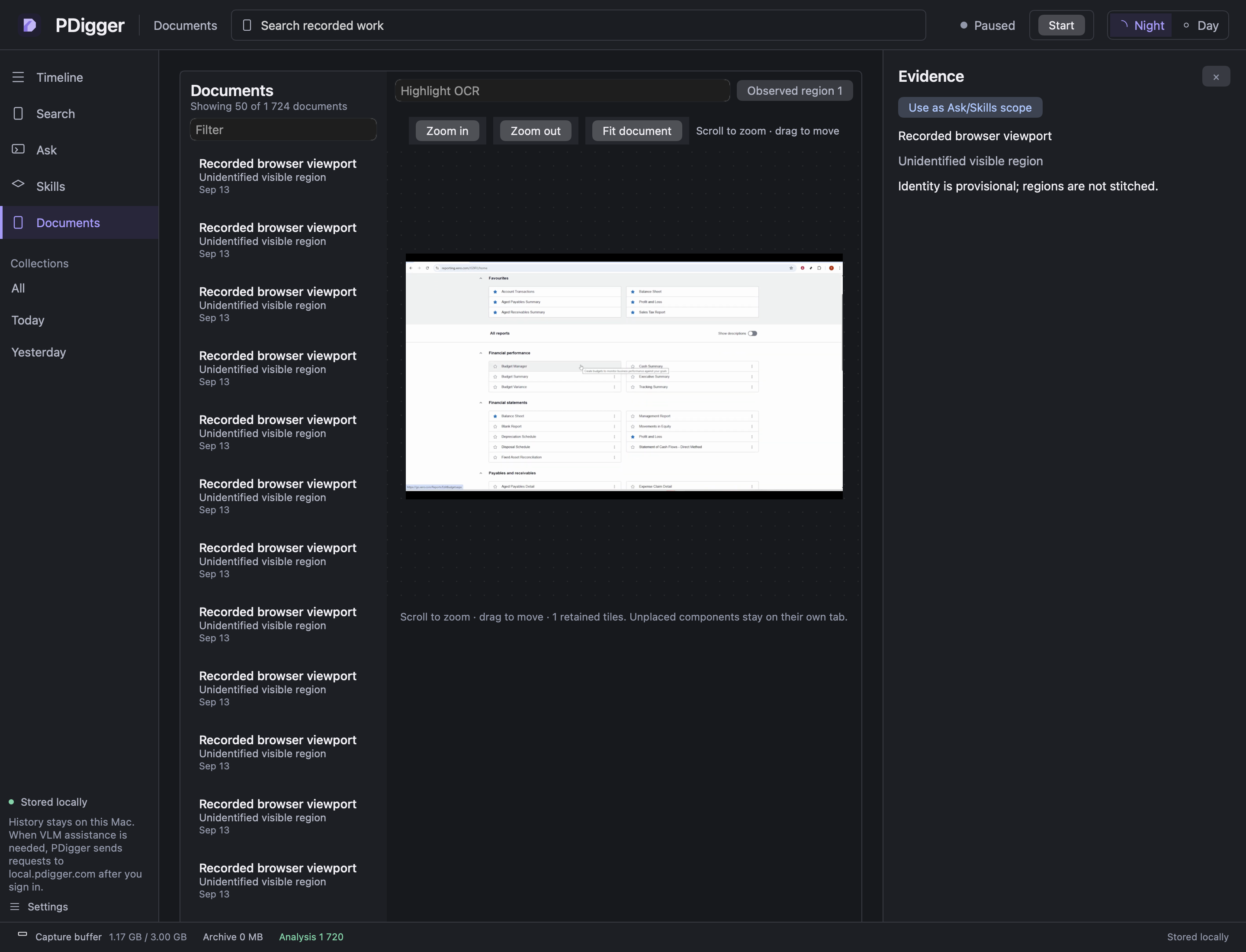
Documents page with a selected map, Scroll to zoom status, and Fit document
The map is the recorded report surface, shown upright inside PDigger. Scroll to zoom, drag to move. Regions stay separate when the recorder could not stitch them. Titles stay Recorded browser viewport.

Next: Ask what you did in Xero.